



Politics Service
As poverty created by the government deepens day by day, citizens who can no longer meet even basic needs are looking for a way out.
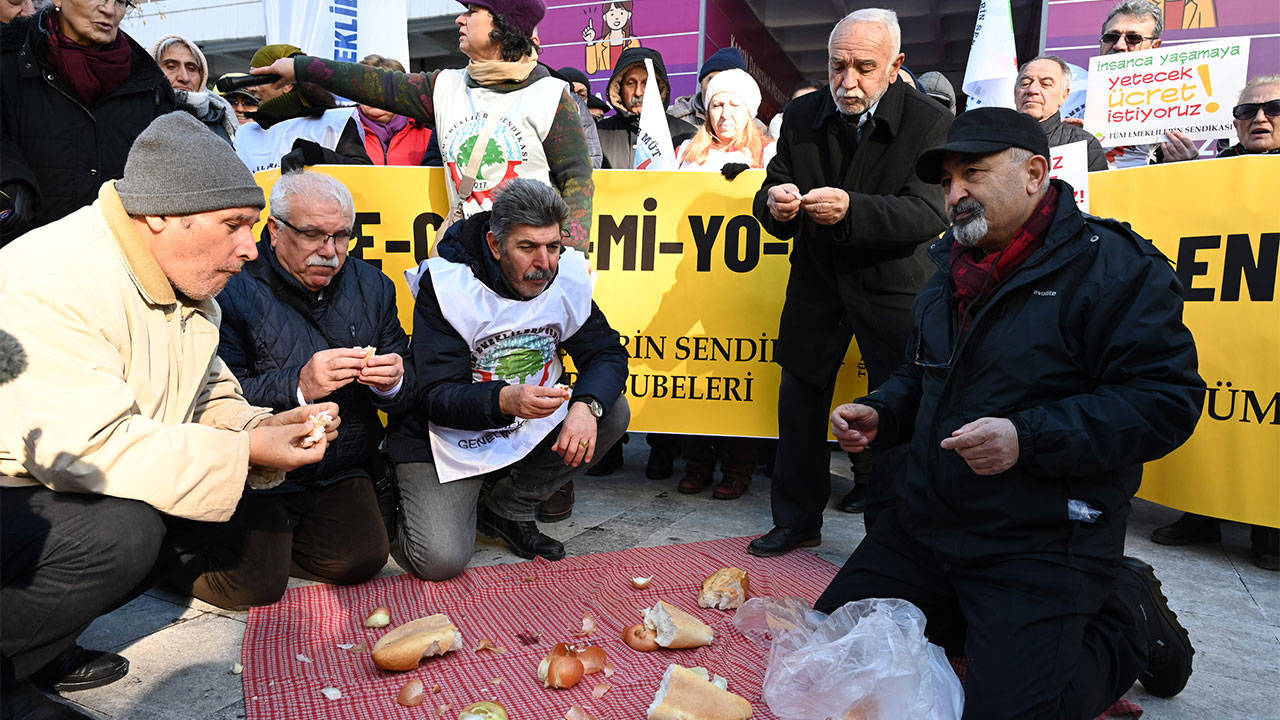
The Palace administration, which loads the entire burden of the crisis onto the backs of the poor, continues to tell “success” stories, while the public flocks to queues for cheap food and to markets selling expired products.
With the Mehmet Şimşek programme, austerity policies are making the public poorer with each passing day. By contrast, many examples, from writing off employers’ tax debts to continuing guarantee payments and handing the country’s resources over to capitalists, show that the crisis is a choice. At the same time, the government is impoverishing the masses and making them dependent on it.
ACCORDING TO THE GOVERNMENT, WE HAVE OVERTAKEN ITALY
In his speech at his party’s group meeting last week, President Recep Tayyip Erdoğan argued that this year would be a year of reforms for Turkey. Erdoğan also claimed that national income on an annual basis had exceeded $1.5 trillion. Vice President Cevdet Yılmaz said recently that when the State Planning Organisation was established, Italy was taken as a benchmark target for Turkey and added: “Today, for the first time in terms of purchasing power, we are overtaking Italy. This is an important turning point in Turkey’s development story.” Yet, contrary to the “success” stories being told, deepening poverty in Turkey has reached dreadful levels. Recent stories of poverty reflected in the media lay bare the situation the country has been dragged into.
PRODUCTS CLOSE TO THEIR USE-BY DATE ARE BEING SOLD
Across Turkey, rising food prices have made access to basic needs harder day by day. As purchasing power has fallen, many citizens have had to return empty-handed from shops and markets, while discount stores are attracting intense interest. This picture points to a clear shift in shopping choices, especially among low-income groups. According to İlke Çıtır of NEFES, at Yenir Market visited in Eskişehir, products that big chains have removed from their shelves are put on sale. The market’s slogan “Waste Warrior” stands out, while the shelves contain products whose recommended consumption date has passed or whose use-by date is close. A wide range of products including pulses, dairy, cleaning supplies and baby products are sold at discounts ranging from 50% to 80%. Although the price tags look attractive at first glance, it is seen that a significant portion of the products have recommended consumption dates that expired months ago. Retirees and students stand out among shoppers.
THE RED CRESCENT’S SOUP KITCHEN PROJECT FOR 81 PROVINCES
Speaking at a press conference held in İstanbul last week, Turkish Red Crescent President Prof Dr Fatma Meriç Yılmaz said they aimed to expand to 81 soup kitchens in 81 provinces. Arguing that the new soup kitchens are not only social support points but also critical logistics centres that can increase capacity by 8–10 times during disasters, Yılmaz said: “Our soup kitchens can, in a sense, become disaster depots that can produce 8 or 10 times more meals during a disaster period. So by positioning these soup kitchens, we serve more than one purpose.”
Retirees in İzmir Basmane and Ankara Ulus are trying to live in hotels where the nightly rate is 200 TL. In most rooms, there is no bathroom or toilet. Some cannot even find food to eat. Meanwhile, public opinion polls also show the scale poverty has reached. In all surveys without exception, the country’s most pressing problem is seen to be the economic crisis, the cost of living and unemployment. In these surveys, citizens have become unable to meet even basic needs such as food, shelter, clothing and healthcare.
Note: This article is translated from the original article titled Halk yardıma muhtaç edildi, published in BirGün newspaper on January 14, 2026.