


Yusuf Tuna Koç
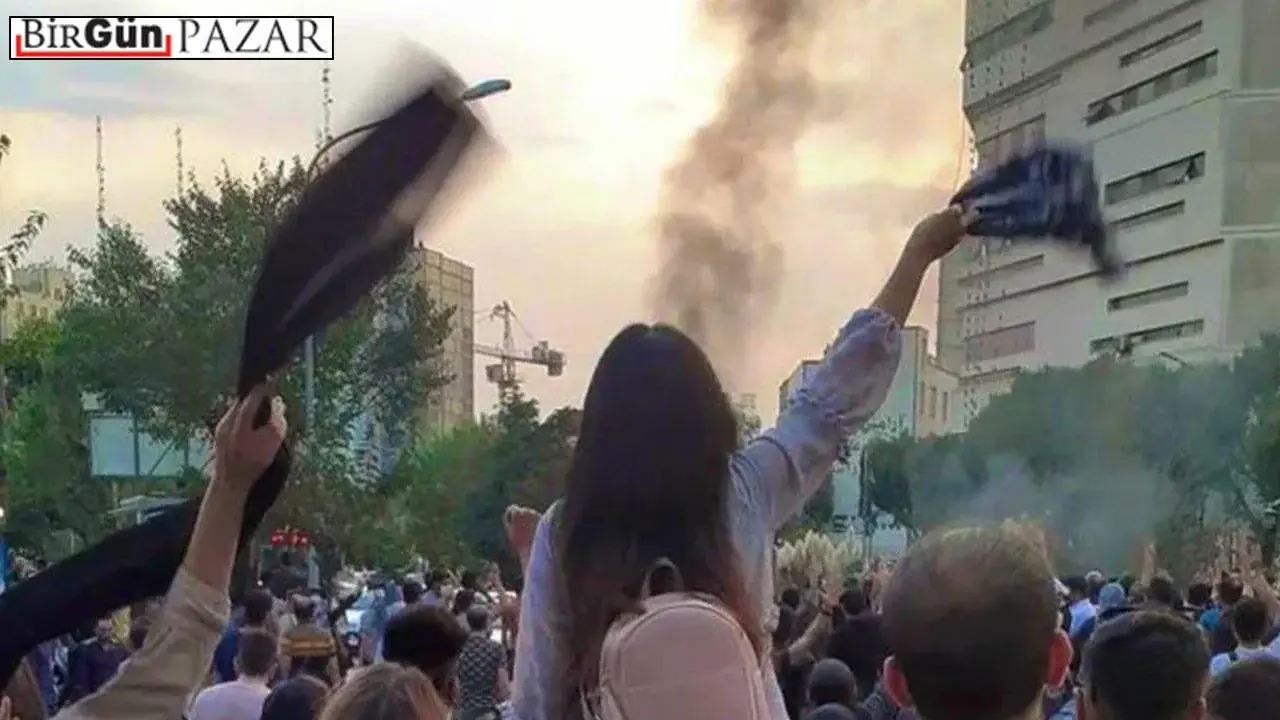
The protests that began in Iran on 28 December have now spread across the entire country. Initially sparked by severe economic decline in Tehran by market traders, the protests quickly spread to different parts of the country. Inflation, high prices and unemployment, as well as the anti-democratic practices and oppression caused by the Islamist dictatorship in the country, became the driving forces behind the protests. As of today, feminist uprisings similar to the 2022 Masha Amini protests, calls for a general strike by socialists, and democratic demands by various minorities have also become part of the protests. Contrary to the image the West tries to portray, those calling for the return of the Pahlavi regime or for foreign intervention are a very small minority. Iranians are well aware of what foreign intervention means, both from their own history and from what has happened to their neighbours. The slogan that unites the diverse crowd almost everywhere is the same: ‘Death to the dictator!’
However, although the Iranian regime initially acted more gently than in the past, it has attempted to suppress the people in an extremely brutal manner as the protests have continued. We spoke with academic Tolga Gürakar about the political motivations behind the popular uprising in Iran, the regime’s stance, and the possibility of external intervention.
***
The protests in Iran, which began as a merchants’ revolt at the end of December, have now reached a serious mass and national scale. How do you assess this process? What is the reason for it becoming so widespread? Are we talking only about economic reasons, or is there a more general social discontent?
Social movements can never be explained by a single motivation; they are extremely dynamic, fluid processes that evolve over time. Yes, these protests in Iran began on 28 December with shopkeepers closing their shops. However, at this point, it is no longer possible to say that shopkeepers are the driving force behind this movement or that they play a decisive role.
This situation actually applies to many social movements. Looking at other social uprisings that have emerged in the recent period, we see significant differences between the groups that took to the streets in the early days and the picture that emerged a few weeks later. Movements acquire different dynamics over time; symbolic power struggles, the search for leadership, and attempts to direct the masses come into play. Therefore, the motivation that began on 28 December is not the same as the demands on the ground today.
In this sense, one really needs to know Iran from the inside. I worked intensively on Iran between 2007 and 2012, focusing on the Iranian Revolution, the sociology of revolution, and social movements. At the point we have reached today, we are in a completely different process. The initial demands are not the same as today’s demands.
THE REVOLT EXCEEDED THE SHOPKEEPERS
Can we say that a particular ideology or organised political structure is at the forefront of these actions? Or is it a completely heterogeneous picture?
When we look at the history of social movements, we see an extremely heterogeneous structure, for example, in the 1979 Iranian Revolution. There were middle classes, there were poor people, there were conservatives, there were socialists, there were Islamists, there were clerics. The process evolved into something completely different in a short period of time. The movement that began in late 1978 resulted in a change of power in just two months, in February 1979. In this respect, the Iranian Revolution remains a case study that sociologists take very seriously in terms of mass mobilisation. It is one of the events that particularly catches the attention of sociologists studying revolutionary processes, especially in terms of where it started and where it ended.
Returning to the present day, I consider it significant that the shopkeepers in the bazaar initiated the protests. Historically in Iran, whenever the bazaar closed its shutters, major ruptures occurred. However, one must not think of the bazaar as a homogeneous structure. Bazaar merchants have a rather conservative structure; they are conservative both in religious terms and in terms of the caution that comes with capital ownership. They also have serious class divisions within themselves.
Those who took to the streets on 28 December were mostly small traders from the lower and lower-middle classes. The large merchant groups in the upper echelons of the Tehran Bazaar, who have closer ties to the ulema, were not involved in this process. Therefore, interpretations such as ‘the bazaar is involved in this, a regime change will come from here’ are overly simplistic.
As of today, bazaar merchants do not play an active role in the protests. There may be individual supporters, but they are not present as a collective force. The current movement is more an expression of long-standing social demands, particularly the objections voiced by young people and women regarding identity, lifestyle, and freedoms.
Can we talk about a political structure that is leading and standing out at this point?
It is necessary to understand the current political structure in Iran well. The kind of freely organised parties, independent propaganda tools, and political actors who can reach the masses through the media that we see in Western democracies do not exist in Iran. Even the presidency remains a secondary element alongside the Velayat-e Faqih regime. The President’s powers are often restricted by the Ayatollah and the Revolutionary Guards.
In other words, there is a dual-layered state structure in Iran: on one side, elections, candidates, presidents; on the other, the religious and military structure that holds the real power. Therefore, it is difficult to speak of an organised, non-systemic political actor that is openly leading the actions today. The process is largely spontaneous and beyond the control of existing organised structures.
I would like to ask about the Pahlavi issue, which is frequently discussed in the Western media. Statements from the US and Israel, Trump’s calls, Netanyahu’s statements… How much do these affect the political situation inside the country? Also, does the Pahlavi family have any real resonance in Iranian society today?
I can say this very clearly: the Pahlavis have no real counterpart in Iranian society today. The Shah regime, especially the era of Mohammad Reza Pahlavi, is associated with extremely negative memories in the collective memory of the Iranian people.
The main reason why Pahlavi’s voice is heard so much from outside is that he lives abroad and is brought to the agenda through the diaspora. This does not indicate a social demand within Iran. No matter how dissatisfied the Iranian people are with the Velayat-e Faqih regime, they are not seeking a solution in a monarchy that belongs to the past.
However, if there is a military intervention from outside Iran, the regime is completely overthrown, and a name is imposed from outside – which is an extremely extreme scenario – then figures like Pehlevi may be brought to the fore. But this would be due to external intervention, not the demand of society. Pehlevi has no legitimacy at the societal level.
THE POSSIBILITY OF RESTORATION SHOULD NOT BE IGNORED
How do you think the potential threats of intervention by the US and Israel affect the regime and the people taking action?
Such interventions affect the balance of power within Iran rather than overthrowing the regime. They may increase the contradictions among the elites, but let us not forget: all these elites are part of the system.
In such situations, moderates generally gain power against the hardliners.
Iran is a country with a strong bureaucracy and diplomatic heritage. Direct intervention by the US or Israel could strengthen the reformist wing internally; however, these reformists are not actors coming from outside the system. The events following the 2009 Ahmadinejad elections are a good example of this.
Mir-Hossein Mousavi was presented in the Western media as a liberal figure, but he was a prime minister during the Khomeini era and a figure who came from within the system.
Finally, we see that such social explosions have become almost periodic in Iran. Do you think the regime can respond flexibly to these demands?
Protests have never ceased in Iran since the Islamic Revolution; however, the time between them is gradually shortening. The large waves that used to occur every 3-5 years now emerge at much shorter intervals.
This situation may strengthen the hand of moderate politicians in the long term. The Iranian state has an extremely pragmatic tradition. Despite its harsh rhetoric, it is well versed in diplomacy and the politics of balance. Therefore, any potential changes will occur internally, in a controlled and gradual manner. Expecting a radical break in the short term is unrealistic; however, the possibility of a reformist restoration in the medium term should not be overlooked.
Note: This article is translated from the original article titled Rejim pragmatist davranabilir, published in BirGün newspaper on January 18, 2026.