


Yusuf Tuna Koç
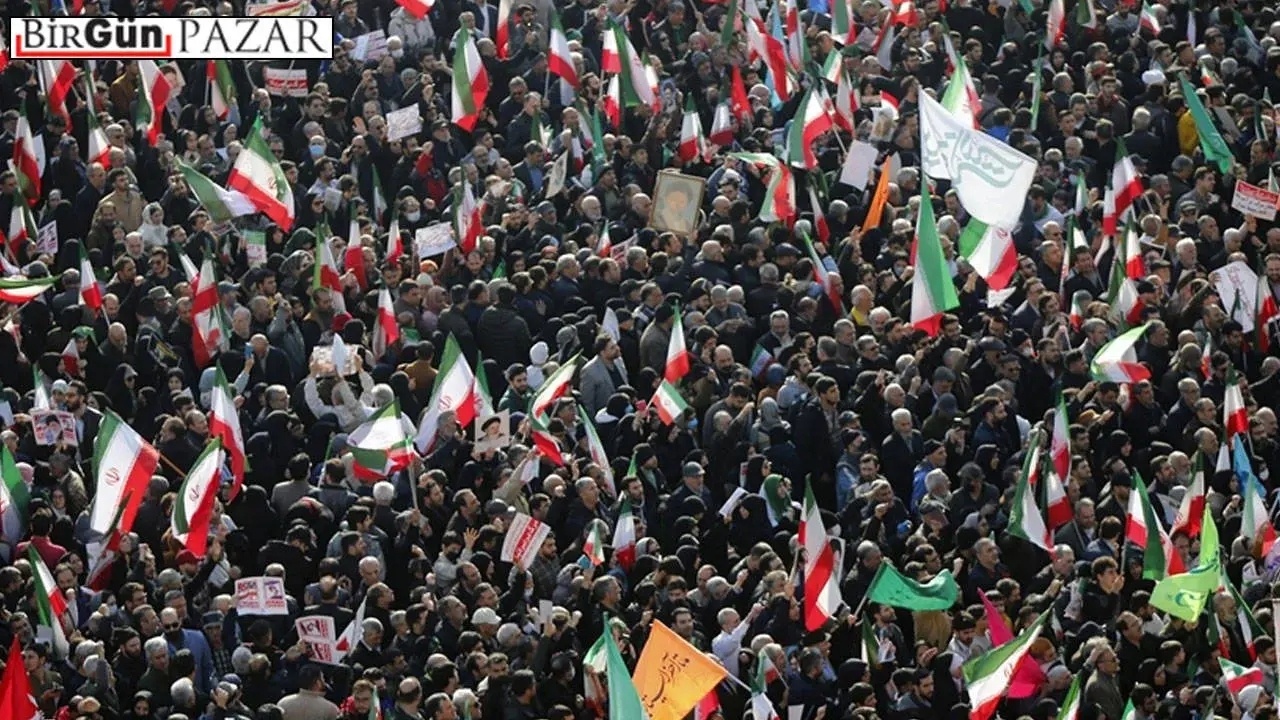
The protests that began in Iran on 28 December have now spread across the entire country. Initially sparked by severe economic decline in Tehran by market traders, the protests quickly spread to different parts of the country. Inflation, high prices and unemployment, as well as the anti-democratic practices and oppression caused by the Islamist dictatorship in the country, became the driving forces behind the protests. As of today, feminist uprisings similar to the 2022 Masha Amini protests, calls for a general strike by socialists, and democratic demands by various minorities have also become part of the protests. Contrary to the image the West tries to portray, those calling for the return of the Pahlavi regime or for foreign intervention are a very small minority. Iranians are well aware of what foreign intervention means, both from their own history and from what has happened to their neighbours. The slogan that unites the diverse crowd almost everywhere is the same: ‘Death to the dictator!’
However, although the Iranian regime initially acted more gently than in the past, it has attempted to suppress the people in an extremely brutal manner as the protests have continued. We spoke with Iranian journalist Reza Talebi about the political motivations behind the popular uprising in Iran, the regime’s stance, and the possibility of foreign intervention.
***
What is the most fundamental anti-regime sentiment and demand that everyone participating in the protests in Iran since the end of December can agree on, and what issues are most prominent in the protests?
The current protests in Iran are a continuation of previous waves; however, this time it is not just a repeating pattern, but a clear paradigm shift. In previous years, protests, including the ‘Women, Life, Freedom’ uprising, were largely shaped around economic demands and expectations for reform. Today, however, historical demands, structural collapse and political deadlock have been added to the same economic ground.
Previously, protests targeted internal system retreats or temporary concessions; today, the objection is directed at the system itself. Demands have gone beyond the limits of ‘reform,’ and the regime’s continuation is now being questioned. In other words, the logic of protest in Iran is no longer about ‘correction’ but about producing a demand for transition.
Socially, although these protests are still largely carried by the impoverished middle class, the demands have spread to the lower classes. The problem is no longer just food; it is humiliation, lack of future prospects, and the systematic destruction of human dignity. The economic crisis has turned into a crisis of dignity in Iran.
In this context, despite their different ideological and identity backgrounds, the fundamental point on which the protesters agree is this: an exit from Ali Khamenei and the apparatus of oppression organised around him. The hope for reform has been exhausted; even ‘not wanting this regime’ has become a common and powerful demand in itself.
How is the current situation different from the uprisings of 2022 and earlier?
The most fundamental difference today is this: the Islamic Republic has eroded the concept of society and the sense of national unity over many years. The regime has deliberately created a kind of social entropy, producing fragmented, insecure and isolated members of society. There is now less of a cohesive ‘society’ and more of a collection of scattered groups and isolated individuals.
In contrast, Ali Khamenei has built an ‘alternative nation’ consisting of ideological, security-oriented and rent-seeking structures loyal to him. This had effectively plunged Iran into a soft civil war atmosphere years ago; today, this conflict has become harsher, more naked and more violent.
If there is no genuine convergence and dialogue between intellectuals, social actors and political groups – which the regime is specifically preventing – it will be extremely difficult to heal these divisions in the post-Khamenei era.
Today’s protests are the culmination of all the previous suppressed uprisings and the cycle of violence that has resulted in the deaths of hundreds of thousands of people since the revolution. The 1979 Revolution failed to establish a new and just structure, essentially only replacing the Shah with the mullahs. The crises we are witnessing today are a more radical return of this historical legacy.
IT IS THE REGIME ITSELF THAT HAS BROUGHT FOREIGN INTERVENTION SO CLOSE
How serious are the threats of intervention by the US and Israel for the government, and how do activists approach this situation?
It is impossible to completely disregard the influence of the US and Israel over Iran; however, reducing everything to these two actors is now an invalid and simplistic approach. The statement ‘Be quiet, because external powers will take advantage’ is neither realistic nor ethical.
The real issue is this: the regime itself is primarily responsible for making external influence so possible. The responsibility for every person killed in the streets, every suppression, lies directly with the administration. This responsibility cannot be eliminated with the rhetoric of an ‘external enemy’.
If it is claimed that Mossad or US intelligence agents are operating in the country, the inevitable question is: Why are these elements not exposed within the state’s internal structures, economic and security networks? Why is punishment only applied to the streets, the public and collectively?
A historical example is important for foreign readers: Abbas Emirentezam was deputy prime minister of the interim government after 1979. He was imprisoned for approximately 28 years on charges of being a ‘US agent’ due to routine diplomatic correspondence. Yet the same regime had entered into secret negotiations with the US and Israel in the 1980s in the context of the McFarlane affair. This hypocrisy has completely eroded the regime’s security rhetoric among the public.
On the other hand, part of the opposition has also strengthened the regime’s hand by acting with Israeli and US symbols. The use of the Israeli flag and the departure from global moral sensitivity on issues such as Gaza are the result of a failure to understand the sensitivities of Iranian society.
Today, the Islamic Republic is perceived by a large part of its people as a foreign power. The US and Israeli discourse is no longer persuasive; it is a defensive reflex that reveals a crisis of legitimacy.
PEHLEVI HAS NO SOCIAL RESONANCE
Does Pehlevi, who is widely supported in the West, have any significant resonance in the country?
What I express here is my personal assessment. The real social response to the Pahlavi line within Iran has never been measured independently. The real strategic mistake is to interpret the entire protest dynamic through a single figure.
If Reza Pahlavi had sought to establish a genuine basis for unity with different opposition actors instead of positioning himself as a ‘pioneering leader,’ the picture might have been different. However, it appears that today, it is essentially being circulated as a nostalgic alternative.
Even if it were to achieve hypothetical success, this line does not have the capacity to hold together Iran’s ethnic, sectarian and political diversity. Its resonance among Turks, Kurds, Arabs and Balochs is extremely limited. When you add to this the radical ideological bloc loyal to Khamenei, the result is not stability but deeper conflict.
The West also often sees this figure not as a ‘target’ but as a tool. Moreover, the authoritarian and exclusionary language of some of his supporters evokes not a new synthesis but merely a reversal of old authoritarianism.
Can today’s actions give rise to a new opposition and leadership?
This is the most difficult question. Because the Islamic Republic has dried up all possible leadership channels through systematic repression. Executions, exiles and mass arrests have eliminated potential leadership cadres. Nevertheless, there are still potential figures both in the diaspora and in prisons.
What Iran needs in today’s bleak picture is charismatic but responsible leadership. This leadership must clearly say ‘no’ to the regime’s violence, advocate for an exit from the regime, and establish a line that will protect the country from civil war and foreign intervention.
External pressure can be meaningful up to a point of deterrence; war, however, is a destruction that no leader can control. Therefore, the fundamental message is this: social consensus is much stronger than weapons and siege. Democracy is not possible by force; it can only be achieved through collective wisdom, building trust, and protecting the country as a whole.
Note: This article is translated from the original article titled İran devrimi başarısız oldu, published in BirGün newspaper on January 18, 2026.