


Yusuf Tuna Koç
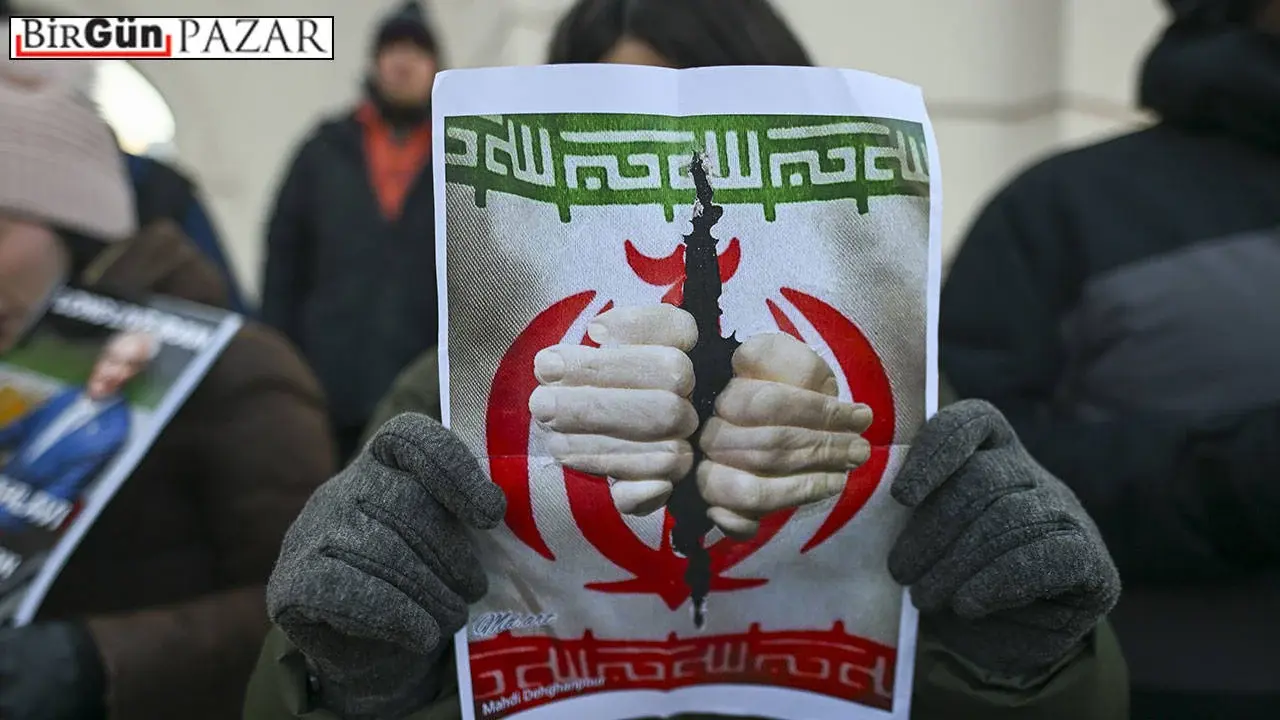
The protests that began in Iran on 28 December have now spread across the entire country. Initially sparked by severe economic decline in Tehran by market traders, the protests quickly spread to different parts of the country. Inflation, high prices and unemployment, as well as the anti-democratic practices and oppression caused by the Islamist dictatorship in the country, became the driving forces behind the protests. As of today, feminist uprisings similar to the 2022 Masha Amini protests, calls for a general strike by socialists, and democratic demands by various minorities have also become part of the protests. Contrary to the image the West tries to portray, those calling for the return of the Pahlavi regime or for foreign intervention are a very small minority. Iranians are well aware of what foreign intervention means, both from their own history and from what has happened to their neighbours. The slogan that unites the diverse crowd almost everywhere is the same: ‘Death to the dictator!’
In contrast, although the Iranian regime initially acted more softly than in the past, as the protests have continued, it has tried to suppress the people in an extremely brutal manner. We discussed the political motivations behind the popular uprising in Iran, the regime’s attitude, and the possibility of foreign intervention with Karabekir Akkoyunlu from SOAS University in London.
Not long after the 2022 uprising in Iran, we are witnessing another nationwide uprising. How do you assess these protests, what demands and issues triggered them, and why have they spread to such a large segment of the population?
Iran is a tangle of problems, and the Islamic Republic’s administration has lost its ability to find solutions to these problems. Since 2009, uprisings have been erupting at increasingly frequent intervals and are being suppressed each time with severe and widespread violence. The political, economic and social problems that trigger the protests, far from being resolved, deepen and branch out, becoming the legacy for the next wave of protests. External factors, ranging from US sanctions to the effects of the climate crisis, play an important role in the formation of this knot of problems. At the same time, there is an increasingly serious governance crisis within the country.
As a result of years of power struggles within the system, the Islamic Republic has lost the relatively pluralistic political structure it enjoyed in the 1990s and 2000s, along with the flexibility and representational capacity that this structure provided. Power has become concentrated in the hands of the spiritual leader Ayatollah Khamenei and a small circle around him. The main characteristics defining this circle are absolute loyalty to the leader and an uncompromising stance in the face of internal and external challenges. They believe that any concession would lead to irreversible disintegration, as in the case of Glasnost in the Soviet Union, and therefore respond to problems with increasingly violent measures.
In Iran, can the regime, faced with increasingly frequent popular uprisings and the people’s demands for both economic and democratic reforms, show some flexibility, or are we facing a more profound regime crisis?
I believe we have missed the boat on this one. The reform movement in Iran sought power during the Hatemi era in the 1990s, during Mousavi’s presidential candidacy in 2009, and most recently during Rouhani’s presidency, which ended in 2021. The Iranian people, who did not want a new revolution, strongly supported these reformist waves. The reformists aimed to transform the system from within and gradually, transitioning to a republican order where the rule of law and democracy were more internalised. However, they were met with the hardline wing of the regime. In addition, the US made moves that undermined the reform movement at the most critical moments. Ultimately, the reform movement was suppressed, its representatives imprisoned, politically neutralised or silenced. This process greatly eroded the hope within Iranian society, particularly among the younger generations, that the system could be changed from within. This can be seen both in the sharp decline in voter turnout and in the fact that revolutionary demands, rather than reformist ones, increasingly came to the fore in protests.
CANNOT BE INTERPRETED SOLELY IN TERMS OF EXTERNAL ACTORS
How do you think the regional developments after 7 October and even the 12-day war with Israel have affected Iranian politics in terms of today’s actions? How are Trump and Netanyahu’s threats of intervention perceived today, both by the regime and the protesters?
The events following 7 October deepened the existential crisis facing the Islamic Republic’s leadership. With Israel’s blow to Hezbollah and the overthrow of the Assad regime in Syria, Iran lost its key allies in the region and became vulnerable to direct attacks. The extent to which Israeli intelligence had infiltrated Iran during the twelve-day war also became apparent. Consequently, the regime believes that recent developments are part of Trump and Netanyahu’s plans, using language that legitimises violence by labelling protesters as ‘terrorists.’
It is no secret that the US and Israel have clear objectives and plans for Iran. The pro-US and pro-Israel stance of a significant portion of the Iranian diaspora in the West is also evident. Pro-monarchy Iranians, in particular, feel no need to hide their chauvinistic, racist and anti-democratic tendencies. However, this group, whose voice has become louder in recent times, has never had a strong counterpart in Iranian society. In today’s climate of despair, there may be Iranians who, like someone drowning clinging to a snake, pin their hopes on external intervention; but it would be a serious mistake to interpret developments solely or primarily through the lens of external actors. Unfortunately, leftist circles in Turkey and Europe often fall into this trap.
Protests in Iran are not emerging because external powers want them to; on the contrary, the regime has largely lost its legitimacy and has declared war on its own people, creating fertile ground for external intervention. The Iranian people’s struggle for rights and democracy has deep roots stretching back to the 19th century. Similarly, they know very well what foreign intervention means from their historical experience. Therefore, it is possible, indeed necessary, to both support the legitimate demands of the Iranian people and to clearly oppose the instrumentalisation of these demands by actors such as Trump or Netanyahu.
Without external intervention, could the increasing nationwide protests and unrest in Iran open the door to a democratic regime or transformation?
Unfortunately, I do not see Iran’s transition to a democratic regime as very likely in the short term. The possible scenarios can be broadly summarised under three headings.
First, there is no external intervention and the regime continues to suppress protests; the status quo is maintained until the next wave of uprisings. This is the most realistic scenario in the short term.
Second, the regime is overthrown as a result of external intervention and the son of the deposed Shah, Reza Pahlavi, is brought to power. However, Pahlavi would be unable to rule the country alone; the Revolutionary Guards and elements of the old regime would resist, separatist movements from Kurdistan to Baluchistan would gain strength, the US would be forced to expand its support, and Iran would be plunged into deepening chaos. This scenario could be described as an Iraq-like collapse. This is the most frightening but currently less likely possibility.
In the third scenario, Khamenei and the regime’s upper echelons lose power as a result of external intervention or a power vacuum; an actor from within the system (probably the Revolutionary Guards) agrees with the US to manage the process. The regime would not be completely destroyed, but it would evolve into a military dictatorship with nationalist overtones, pushing Islamic references into the background. This could also be called the Venezuela scenario. This transformation could be seen as the most likely development even without external intervention, following the death of the 86-year-old Khamenei.
Note: This article is translated from the original article titled Halk artık reform değil devrim istiyor, published in BirGün newspaper on January 18, 2026.